This idea can help you learn the notes and improve your pentatonic fluency across the neck at the same time.
Learning the notes on the fretboard is among one of the most useful things you can do to get you out of the guitar rut. Having the ability to look at the fretboard and see every note just like you would read words in a book is one of those things that you will never realise how important it is until you can do it. This skill takes some time to master but it’s very important that you do if you want to get away from playing your solo’s purely by scale patterns. You will find plenty of products on eBay and throughout the Internet that claim miracle methods to learn this in one hour etc. but let me give you some advice on these miracle methods…
DO NOT WASTE YOUR MONEY ON THESE RIDICULOUS PRODUCTS. THERE IS NO SECRET, THERE IS NO QUICK AND USEFUL METHOD!!
In fact I will go as far as to say they might do you more harm than good. They rely on tricks and the use of mnemonics to help you memorise the notes and find them quickly within relation to one and other through the use of short stories that need to be memorised. These methods serve absolutely no use in real world guitar playing and if you get too used to using them then you are more likely to avoid ever learning them properly.
These ideas do nothing to help you look at a note and just see it purely for what it is. For instance the tenth fret on the B string is an A. When you look at that note you just need to know it’s an A, not.. “it is an A because it is two frets back from the B” or it is an A because the same fret on the string underneath it is a D which you worked out from part of your memorised story… “Doctor Gary Cooper Found Alan Drinking”. This is how some of these crazy ideas work, (think 10th fret starting on the sixth string, D,G,C,F,A,D) they use well known memory tricks to help you find notes and while these tricks are very clever and might have good use elsewhere, they are of absolutely no use in real world guitar playing.
I couldn’t tell you what the best method might be for learning them, I think this will vary from person to person, some people use flash cards, some write it down and make up exercises and I’m sure you could come up with many ways to learn them yourself.
I will explain how I did it and would urge you to try the same method to see if it works for you or maybe adapt my idea to your own liking. Learning to play guitar through sight reading is probably the best method but we’ll leave that for a discussion some other time because I doubt it will be very popular, besides that, I’m no sight reader myself 🙂
Anyway, the first thing I done was to concentrate on just one note and master it across the neck. I started with the note “A” and simply stuck with it everyday for about a week by jamming over an A blues backing track using only the first octave or so from the A minor pentatonic. Not only did this method work well for me but it also made it interesting as well as boosting my enthusiasm to learn the entire fretboard.
The benefits of mastering just one note.
It can be difficult convincing someone just how beneficial it is to be able to instantly visualise the notes on the fretboard. Here are some pros to using my method.
- It’s never boring because you are jamming while you learn.
- You only need to master one twelfth of the fretboard to start seeing some real benefit to knowing the rest of the notes.
- Because you don’t need to learn the fretboard in it’s entirety to see some real benefits, it should encourage you to want to learn the rest of them.
- One note is equal to one twelfth of all the notes on the fretboard but results in something much much more than one twelfth of the improvements you are about to make in your playing. This is only the start of being able to effectively use chord tones in your playing.. one of the biggest differences between pros and amateurs!
Here are all the A notes up to the 14th fret (excluding the open A).
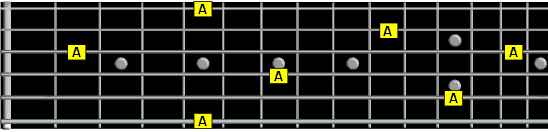
The method is simple. Take the first few notes of your favourite scale (mini pentatonic pattern) and jam with it over a backing track. The Jam Loops are perfect for this if you need to go slow or look for a suitable jam track here on this site.
Move small pentatonic patterns around the neck to start on every A note randomly and just jam along. Every time you move to another “A” make sure you locate and visualise it first before you actually move the pattern to it. This is very important, it’s that mental thinking part that makes you achieve results faster.
The following patterns give you the idea how this is done with the A minor pentatonic, first start with a four note pattern and then move on to slightly larger patterns. As you get comfortable with them try to take note of how these smaller patterns are really just chunks of the five pentatonic positions, at this point you should find you are thinking about the fretboard very differently as a whole new world opens up to you.
Have fun!
Patterns using the first four notes of the A minor pentatonic
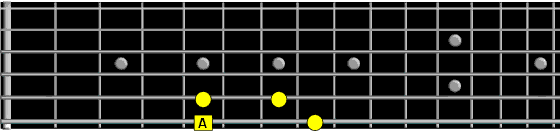
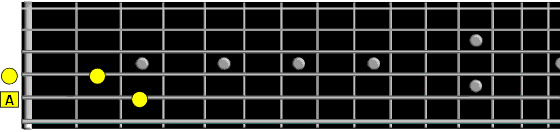
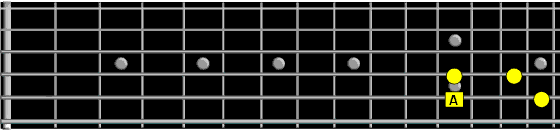
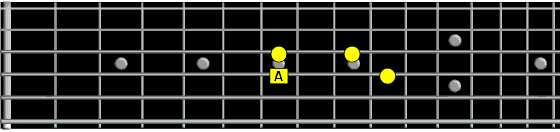
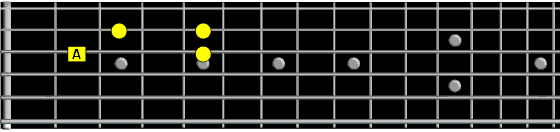
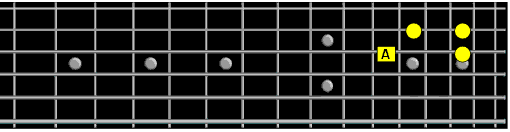
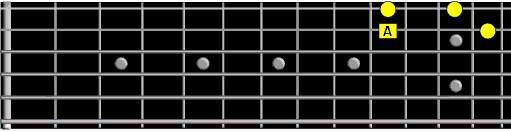
We can’t use the same four note pattern starting on the first string so this one is descending.
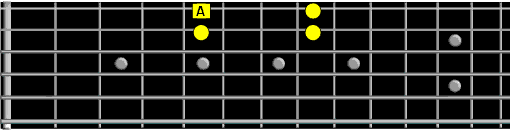
Six note minor pentatonic patterns…
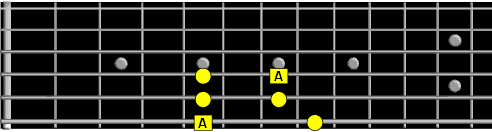
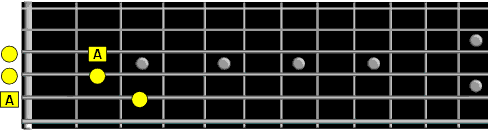
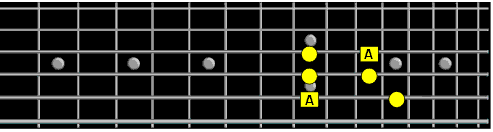
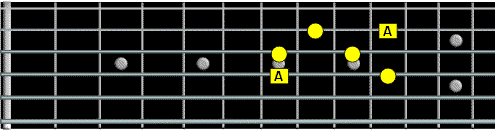
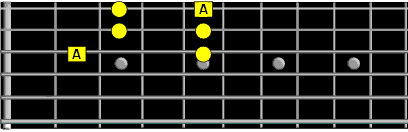
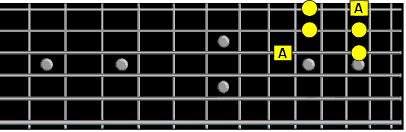
Patterns ascending to the left…
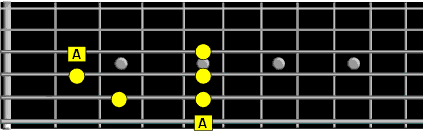
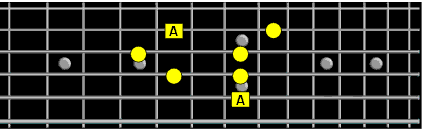
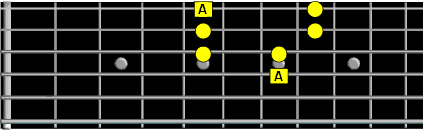
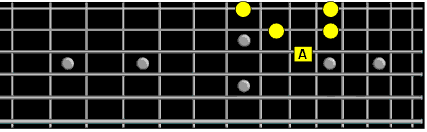
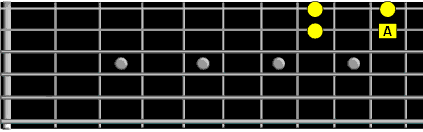
Don’t restrict yourself to just the patterns shown here, these will just get you started. Once you feel comfortable with the idea then move on to other eleven notes. Even though these ideas help greatly to improve the way you think about the pentatonic scales don’t forget the main purpose here is to learn the note locations on the fretboard.
Well, I must say that for quite some time that I’ve been trying to search for a way to memorize the fretboard notes.
Also, I want to develop my technic.
And this is the best idea I’ve ever seen! Like you said, its not nearly fun to try to memorize the notes visually, and believe me, I’ve even tried a flash game that asks you all the notes…
Thanks a lot for pointing out the patterns. 😀
so what after the A note? which note to learn?
Just choose any note and do the same again, the idea is to spend some time with just one note for a while before moving on to the next one.
learning guitar is the most exciting thing !!!
Thank you Lee!
Your advice is excellent!
Best method i have come across…finally some fun learning the entire board. Excellent!
yaa they are soo expensive..but like you said online and book with cd or dvd are the best :D.
.have you tried youtube?…first i would say learn the basics
like all major notes on the fingerboard…then learn how to do scales.
..all major and minor…then you are ready to play easy songs.
…interent had TONS…start with songs you know.
..like twinkle twinkle little star…or happy
birthday song….you know what i mean…then when you master easy small songs.
..find sheet musics or at least notes of your favorite movie songs.
..i said movie songs because…when you try to play this on the violin you’ll know if you sound right or wrong immediately and practice more to get it right….and once you get a hand of playing scales and remembering all the notes…it’s really easy and FUN :D.
..)i(i have that problem sometimes too. turn down your music when you are listening
too it, make sure it isn’t too loud. if you get it after drum lessons, you could wear some earplugs while you are drumming to prevent it. other than that, i haven’t
found a cure yet.
I have been trying to innevt’ a more efficient method to learn every note on the guitar and have been, till now, an advocate of the TAB method to leatn songs quickly.I didn’t realize that? myself’ or an instructor telling me to play, second string, fifth fret; third string, eighth fret; 4th string, 7th fret – was so confusing and unneccesarily complicated, when simply telling me to play: high e, d#, a is much easier in the long run. Thanks for this primer.
All I can say is Thank you.
Can you explain further when you say, “use chord tones in your playing… one of the biggest differences between pros and amateur!
Chord tones are the notes that belong to the chords. For example, the notes in the chord C major are C, E, G. If you land on any of those notes when the chord changes to C then things will sound right. Paying attention to the notes belonging to each chord can make a solo stand out and everything fits. It’s not something that needs to be done every time a chord changes but used tastefully generally makes a solo sound much better.