Guitar Practice Session 1 – The I IV V Progression in C major
The I IV V progression is no doubt the most common chord progression. It’s been used for years and is still used today in thousands of songs in virtually all genres. In this session we are going to get used to the chord tones on the top three strings in one position. Keep it slow, don’t try to learn too much too fast or it will take you longer.
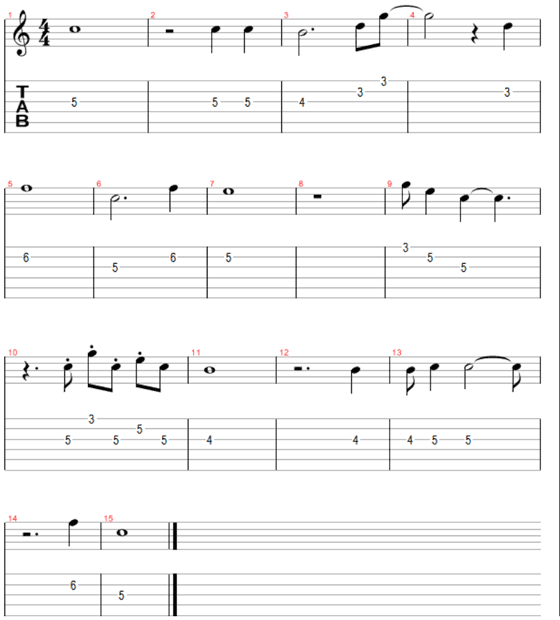
The Chord progression is looped C / G / F / C / and we will stay as close to third position (third fret) as possible with our soloing notes. In fact, try not to play a solo as such, think more about melody instead, this will get you hearing it much better.
The most likely scale you could use to solo over this chord progression is C major. We are only interested in playing the chord tones for now but always take note of the relationship of the chord tones relative to the CAGED chords and major scale notes as well as each chords own scale spelling, I.e. 1-3-5 for major triads. These are all shown in the diagrams but be sure not to overlook any of it otherwise you will be missing the point of what you are trying to achieve.
The Chord tones for each chord.
- C Major: C E G
- F Major: F A C
- G Major: G B D
Memorise them!
The Chord tones and scale spellings (intervals) for C, F and G major chords.
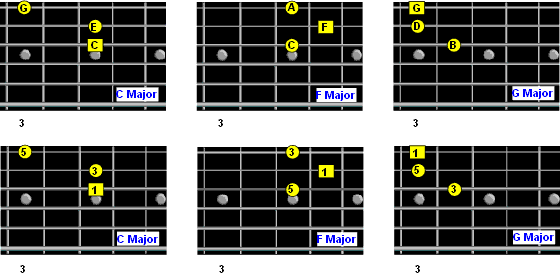
The chord tones above are segments taken from these common chord positions. Remember, the I IV V chords in C major are C, F and G and we want to keep everything close as possible to the C major scale based around the third fret.
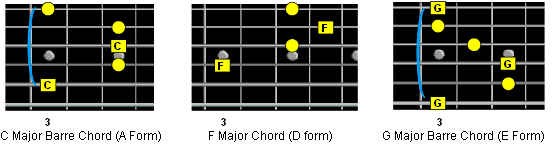
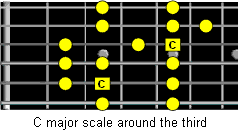

Study these diagrams and think about the relationship between them all while you are playing along to the practice track.
Here are a couple of examples of how you can play about with them. Start out by just repeating the patterns over the chord changes like in example 1 to get used to them.
Once you can play through the patterns without stopping to think, you can then try to get a bit more musical with them. We’re not looking to do anything special here, just concentrate on your practice and try to keep changes smooth between the chords. The ultimate goals are to keep a short distance as possible between the changes, in other words try to think about the changes before they occur so that you can be prepared and only a fret or two away from a chord tone when the chord change happens.
Don’t allow yourself to be put off because you are playing elevator music. If you try to do these examples at 3000bpm then your just going to make it harder and take longer. Slow down, keep it simple and start digging that country sound! 🙂
Example 1 TAB
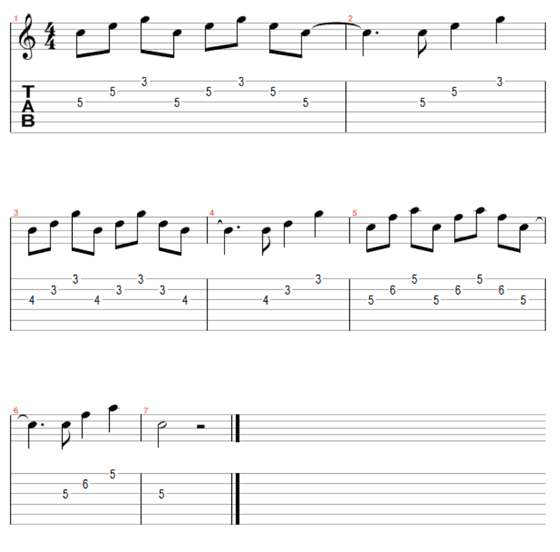
Example 2 TAB
Thank you for the lesson on Chord Tones. How do you get the chord tones to sound musical? Is there anything I can do to sound musical instead of sounding like I am practicing the notes?
My advice is don’t complicate it. This lesson is about learning the notes and nothing else. Get them embedded into your brain so that you can play, and find the notes on autopilot. Chord tones on their own will always sound ‘right’ but predictable and boring. The ‘musical’ sound comes with experience and tons of practice by mixing lots of ideas together.
The idea here is to learn them inside out, play them over and over until you are so familiar with them that you can play them with no thought or effort. Once you can do that, you should find that you can use chord tones to colour, and add spice to your solos. In other words, you could play a solo based around licks and scales but having the ability to think about the chord tones effortlessly will allow you to incorporate them easily. It’s one of those things that you can’t quite ‘get’ until you get it. Just keep practicing them over and over and eventually you should see your solo’s improve naturally.
A good thing to practice with this chord progression is to play the C major scale or C major pentatonic but try landing on a corresponding chord tone with each chord change. Learn some arpeggios for each chord, keep doing it regularly and gradually you will start mixing all your ideas together with ease. At this point the chord tones will start sounding musical.
Hope that makes sense! 🙂
chords are names from the bass up. In following that :Chord 1 is C min 7Chord 2 is G13 (the left hand is 1,5,7. the A is the 9th, the C is the 11th, the E is the 13th and the G is the root. The inteiestrng thing is that most of the chords are formed by 1,5,7 in the LH and the min7 chord one whole step higher in the RH . Thus you can form these chords on any 1,5,7. For example with a LH of D,A,C my RH could be E,G,B, D , a D13 chord. That opens the door to explore chords.